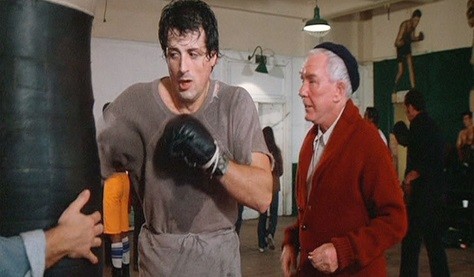
In boxing gyms often you see people lined up in front of the mirror to repeat same old movement: arms bent, hands covering the face and away with shots left, right and left-right again, ad infinitum.
In this way, boring and repetitive trying to learn how to make the gesture as “clean” as possible, correcting errors.
Continuous and frequent repetition (for some teachers even obsessive) is the first step of the so-called motor learning, in other words capturing abilities, through an adaptation, inside your body, involving the central nervous system (CNS).
But how can I tell if I am learning? who tells me that my SNC has learned the gesture?
Learning is not immediate, but the process can be summed up in 3 specific growth stages:
- the gesture is inaccurate, just fluid after each repetition you must stop to resume the starting position (crude coordination);
- the shot begins to be more fluid, increases the frequency of execution thanks to greater sensitivity tendon-muscular level and joint proprioceptive (coordination);
- the gesture is coordinated, effective at any time, even if there are sudden changes ex: self-effacing and strike, etc..
Precisely in relation to this last point, being on Boxing a sport subject to variable and unpredictable situations, learning of the gesture should not be done while remaining stuck in front of a mirror or even worse following a line traced on the ground, but performed already in motion to bring as much as possible the gestures to the situation.
What benefit can I get to learn a blow from a standstill, if then the ring I have to take them on the go? The answer is none.
The time required to learn how to put the shots depends, therefore, on the speed of learning and adaptation of your nervous system, you’ll notice when your shot will go from being ugly and uncoordinated to quickly and efficiently.
Better if the final evaluation is performed by the teacher who is the only one who can verify the change with a very effective tool: occhiometro.